Resources
What do you want to be known for? The Strategic Question that drives business growth

Every ambitious business leader talks about growth. More revenue. Better clients. Stronger margins. But very few can answer, with precision, one critical question: “What do you want to be known for?”
Not what you do. Not your product list. Not your service menu. Most business leaders talk about growth in terms of targets: revenue up 20%, improved margins, increased market share, increased profits. Yet beneath every successful growth strategy sits a more fundamental, and often neglected requirement – what do you want to be known for?
What do you want to be known for?
This is not a branding slogan. It is not a strapline exercise. It is a commercial positioning decision that directly affects your sales funnel performance, pricing power, customer acquisition cost and long-term enterprise value.
When you are unclear, your marketing becomes diluted and generic, your pipeline fills with misaligned prospects and your sales team has to work harder than necessary. When you are precise, the right customers lean in, your reputation compounds and growth becomes more predictable.
Being known for something specific is not a creative indulgence. It is a strategic growth lever.
Brand Positioning and Business Growth: Why clarity drives revenue!
In a competitive market place, customers rarely choose the “competent generalist”. They choose the specialist they associate with a specific outcome.
If your business cannot articulate what it wants to be known for, three things typically happen:
- Your marketing messaging becomes inconsistent
- Your sales funnel widens at the top but leaks heavily in the middle, resulting in lower conversion rates
- Price pressure increases because differentiation is weak
Clarity improves funnel efficiency. When prospects understand your core expertise before the first sales conversation, qualification improves automatically. The wrong-fit customers self-select out. Sales cycles shorten because trust forms faster. Conversion rates increase because your authority feels established.
From a growth perspective, this affects every stage of the funnel:
- Awareness improves because repetition reinforces recognition
- Consideration strengthens because your value proposition is easier to grasp
- Decision accelerates because perceived risk reduces
When your market can complete the sentence, “They are known for…”, you are no longer competing on noise. You are competing on reputation.
B2C Brand Examples: Clarity That Creates Demand
Well-positioned consumer brands demonstrate this principle powerfully.
Nike – Performance and Personal Greatness
Nike is not primarily known for manufacturing footwear. It is known for performance, ambition and pushing limits. “Just Do It” is not a product claim; it is a belief system. Every campaign, sponsorship and product launch reinforces that positioning.
This clarity means customers do not compare Nike solely on price or materials. They buy into identity. That emotional association reduces friction in the sales funnel and sustains premium pricing power.
-

- Source: Nike
-

- Source: Nike
Apple – Design-Led Simplicity
Apple is known for elegant, intuitive design. It is not positioned around processing speed comparisons or technical specifications alone. Its reputation for simplicity and seamless integration drives extraordinary customer loyalty.
Because Apple’s positioning is clear, product launches generate demand before customers walk into stores. The top of the funnel is pre-warmed by brand equity. Marketing cost per acquisition is supported by an installed base of advocates who reinforce what Apple is known for.
-

- source: Apple
-

- source: Apple
IKEA – Affordable, Accessible Design
IKEA has anchored its brand around affordable design and practicality. Customers understand exactly what they will receive: stylish solutions at accessible prices, often requiring self-assembly. This clarity sets expectations and filters the market. Those seeking handcrafted luxury furniture do not enter the funnel. Alignment reduces dissatisfaction and improves lifetime value. In each case, growth is not driven by doing more. It is driven by being known for something precise.
-

- source: Ikea
-

- Source: Ikea
B2B Brand Examples: authority that accelerates trust
In B2B markets, the stakes are arguably higher. Complex buying decisions involve risk, multiple stakeholders and longer sales cycles. Being known for something specific dramatically reduces perceived risk.
Salesforce – CRM Leadership
Salesforce positioned itself as the category leader in customer relationship management. When businesses evaluate CRM systems, Salesforce often appears automatically on the shortlist because of its dominant positioning.

source: salesforce
That category ownership strengthens the middle of the funnel. Prospects arrive with prior awareness, reducing education time and improving close probability.
McKinsey & Company – Strategic Board-Level Advice
McKinsey is known for strategic rigour and board-level advisory. It is not perceived primarily as an implementation consultancy. That distinction protects its pricing and attracts senior decision-makers seeking strategic clarity.
The reputation filters opportunity. Misaligned projects are less likely to enter the pipeline, protecting both margin and brand equity.
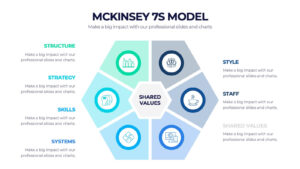
source: McKinsey
HubSpot – Inbound Growth Expertise
HubSpot built its brand around inbound marketing and growth enablement. Its educational content reinforces this authority, drawing in prospects already aligned with its philosophy.
This alignment improves funnel velocity. Prospects are partially educated before engaging sales. Conversion rates benefit because expectations are consistent with delivery.
Authority accelerates trust. Trust accelerates growth.

source: hubspot
Sales funnel efficiency and attracting the right customers
When you are clear about what you want to be known for, your sales funnel becomes more efficient at every stage. At the top of the funnel, your messaging resonates with a specific audience rather than attempting to appeal to everyone. This improves lead quality and reduces wasted marketing spend.
In the middle of the funnel, prospects who remain are better aligned. Qualification conversations are easier because your positioning has already filtered expectations.
At the bottom of the funnel, decision friction decreases. Buyers perceive you as a specialist rather than a risk. That perception supports stronger close rates and often stronger margins.
Clarity does not simply improve brand perception; it improves commercial performance.
The cost of being vague
Businesses that fail to define what they want to be known for often experience stalled growth. They attract a broad but shallow pipeline. They rely heavily on outbound effort rather than inbound pull. They encounter frequent pricing objections.
More critically, they struggle to scale because internal teams lack a unifying narrative. Marketing promotes multiple themes. Sales adapts messaging case by case. The brand becomes inconsistent.
In growth terms, this leads to capped performance. Without a clear reputation anchor, expansion requires increasing effort rather than increasing leverage.
Prompts to help you define what you want to be known for
To articulate what you want to be known for, treat this as a strategic workshop exercise rather than a marketing brainstorm. Use the following prompts to shape clarity:
- What specific problem do we solve better than competitors?
- Where do we consistently deliver disproportionate results?
- Which customer segment generates our strongest margins and advocacy?
- What outcomes do clients repeatedly thank us for?
- What do we want referrals to say about us?
- What future growth direction do we want to reinforce?
- If we had to remove 50% of our services, which 50% would strengthen our positioning?
- What are we willing to exclude in order to sharpen focus?
The objective is specificity. The stronger your answer excludes, the stronger your positioning becomes.
Growth follows reputation
Being known for something is not about ego. It is about commercial intent. When your positioning is clear, marketing spend compounds rather than resets. Sales conversations begin further down the decision path. Referrals become easier because people refer specialists. Margins strengthen because differentiation is credible.
Ultimately, growth is rarely accidental. It is engineered through clarity.
So ask the question deliberately: What do you want to be known for?
Related posts

Sugar or Salt, can you tell the difference?

Don’t let jargon and poor language prevent your next sale